

There's a reason candlelight feels calming and fluorescent light feels harsh. The science behind warm lighting reveals powerful connections between color temperature, mood, and well-being. Understanding these principles will change how you think about the light in your home.
2700K vs 4000K: The Temperature Divide
Color temperature is measured in Kelvin (K). Lower numbers mean warmer, more orange-yellow light. Higher numbers mean cooler, bluer light. Our bodies are biologically wired to respond to these differences — warm light signals sunset and rest, while cool light signals midday alertness.
- 2200–2700K: Warm, cozy, intimate — like fire and sunset
- 3000–3500K: Neutral warm — good for kitchens and work areas
- 4000K+: Cool, clinical — mimics daylight, promotes alertness
Using warm-white bulbs (2700K) in mosaic lamps ensures the colored glass renders beautifully, creating a glow that the body naturally interprets as calming and safe. This is why mosaic lamps feel inherently relaxing — the warm light combined with jewel-toned glass creates an experience that's anti-stress by design.
The light we surround ourselves with shapes how we feel, think, and rest.
How Colored Glass Softens LED Light
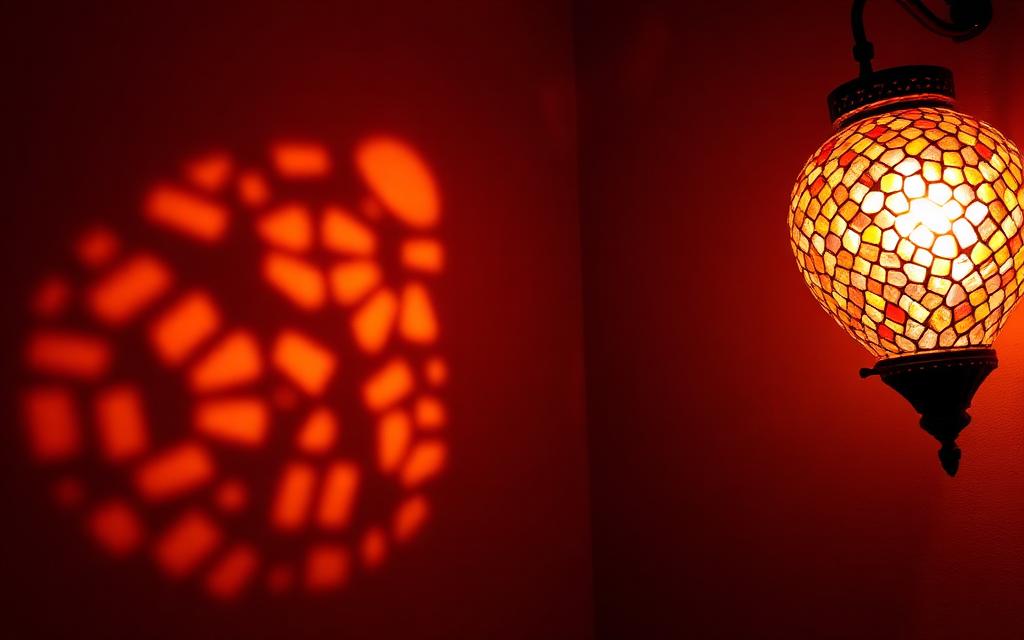
One of the hidden benefits of mosaic lamps is how they filter light. Even a standard LED bulb — which can sometimes feel harsh — becomes soft and diffused when its light passes through colored glass fragments. The glass acts as a natural dimmer and color filter, breaking up the light into warm, dappled patterns that eliminate the flat, uniform quality of direct LED illumination.
Different glass colors filter light differently. Amber and gold glass create the warmest glow. Blue and green glass produce a cooler but still ambient effect. Pink glass creates a uniquely flattering light that makes spaces (and people) look beautiful.
Evening Wind-Down Rituals
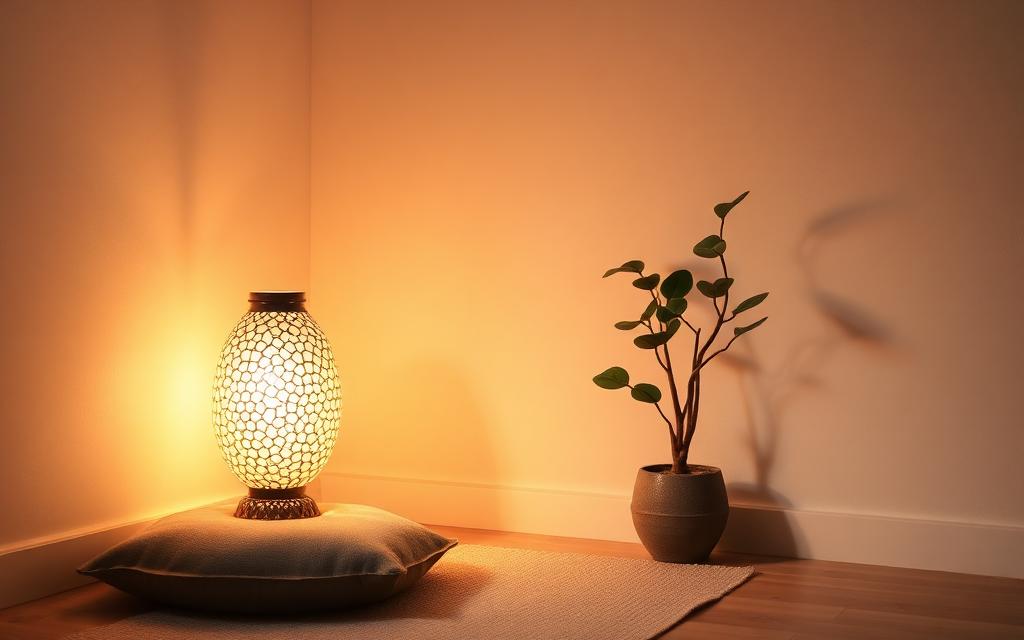
Sleep researchers recommend dimming lights and switching to warm light sources 60–90 minutes before bed to support natural melatonin production. This is where mosaic lamps shine (literally). Making the simple switch from overhead lighting to a mosaic lamp becomes a ritual — a signal to your body and mind that the day is ending.
Pair your mosaic lamp with other calming activities: a cup of herbal tea, a book, gentle music, or journaling. The warm, patterned light creates a cocoon-like atmosphere that makes relaxation feel natural and inevitable.
The Emotional Impact of Jewel Tones
Color psychology research shows that jewel tones — sapphire, emerald, ruby, amber — evoke feelings of richness, depth, and emotional warmth. These are the colors of precious stones, autumn leaves, deep water, and sunset skies. We're drawn to them because they exist abundantly in nature's most dramatic moments.
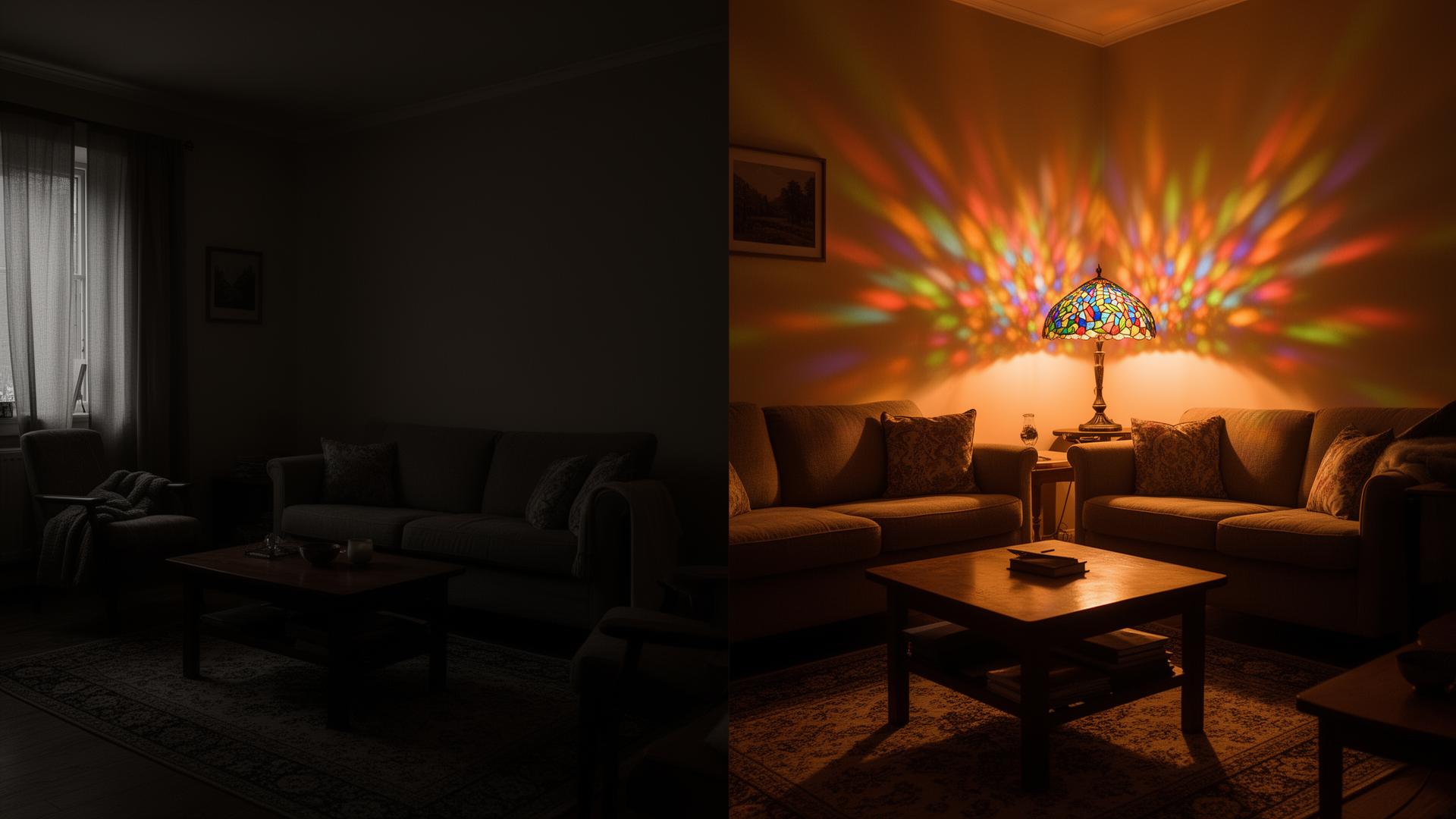
When these colors are rendered in glass and illuminated from within, they gain a luminous quality that flat paint or fabric cannot replicate. A sapphire blue mosaic lamp doesn't just look blue — it glows blue, creating a living, breathing color experience in your room.
Designer Tip
Create a dedicated "soft light hour" before bed. Turn off all overhead lights and use only warm accent lighting. Your sleep quality will thank you. For bedroom-specific tips, read our 10 Cozy Bedroom Lighting Ideas.
Continue Reading


Explore Our Handcrafted Mosaic Lamp Collection
Each lamp is handmade with love — discover the one that speaks to you.
Shop Now